
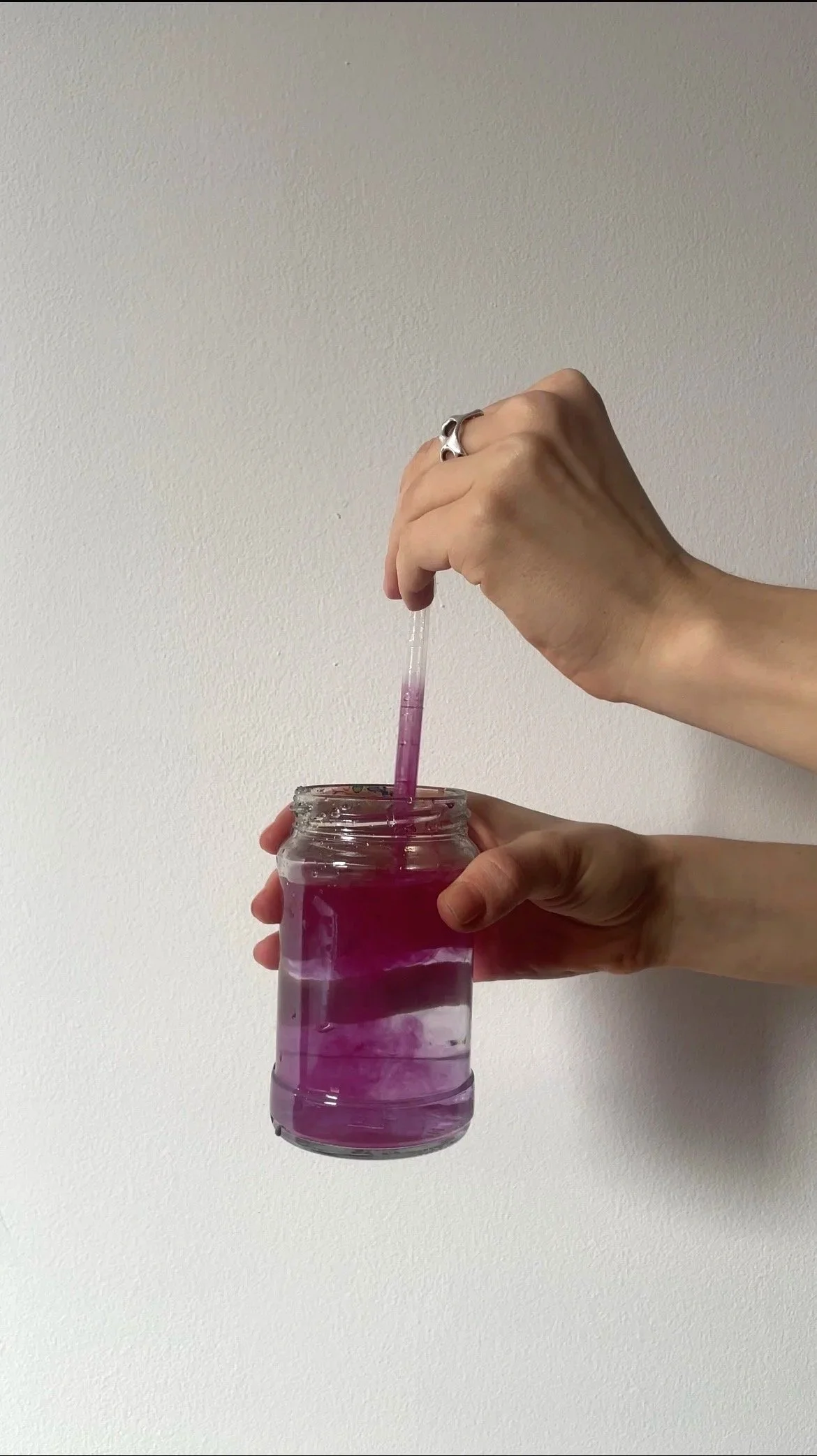
Batik scarves process
The process begins with sketches, where I try to understand the feeling I want to translate into silk. Once the composition feels right, I create a full-scale drawing to guide the final piece.
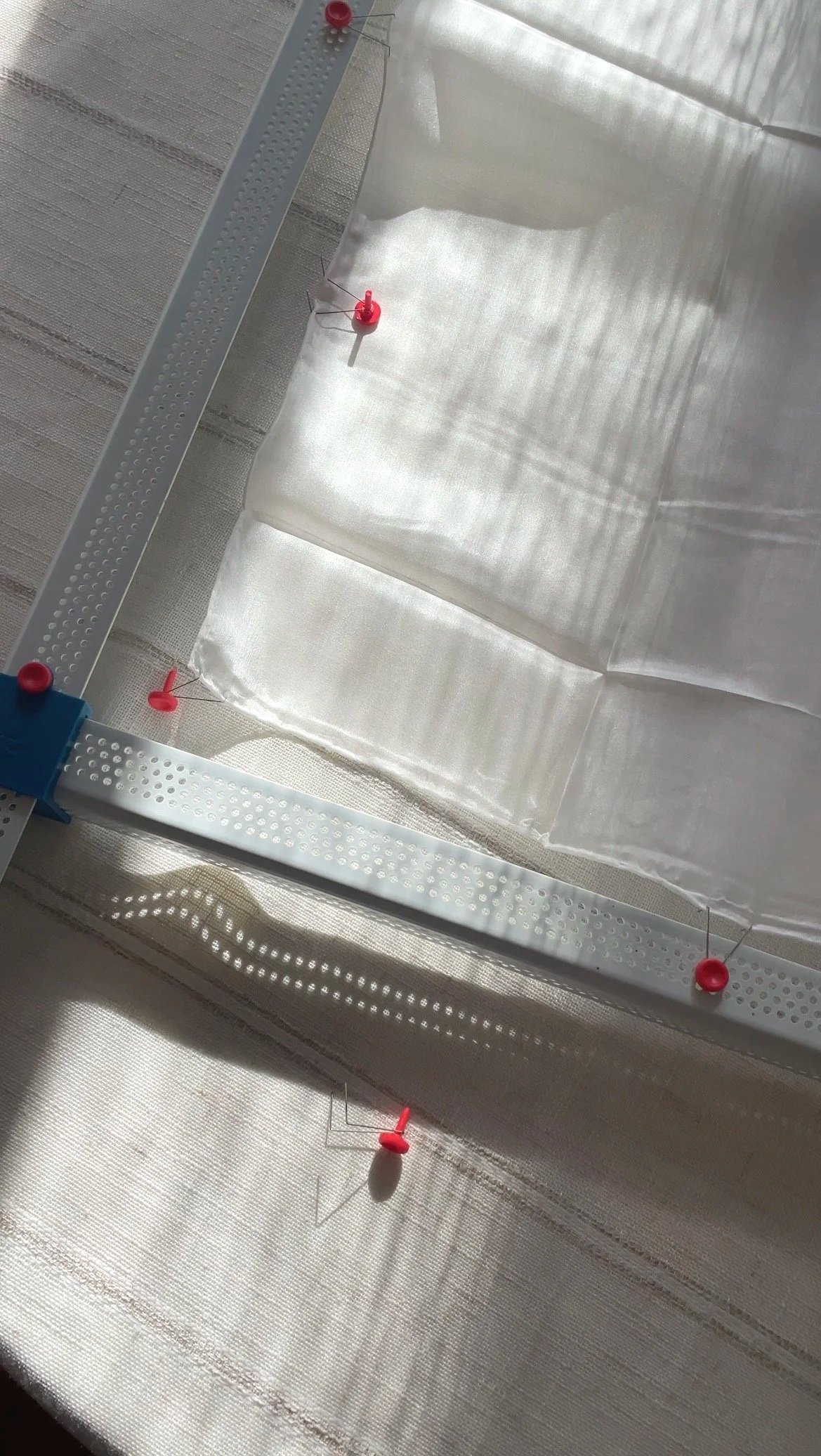
I then prepare a metal frame in the exact size of the scarf and carefully stretch fine Pongé silk onto it. I choose this type of silk for its lightness and subtle transparency — it holds colour beautifully while remaining fluid and airy. When stretched onto the frame, it needs just the right amount of tension: enough to keep the surface stable, but not so much that the fabric loses its softness.
In a way, it feels similar to life — too much tension can strain the silk or distort the painting, while too little allows it to sag and touch the surface below, where the colours would blur and merge uncontrollably. Finding that balance is essential. When it is right, the silk feels alive and responsive under the hand.
1
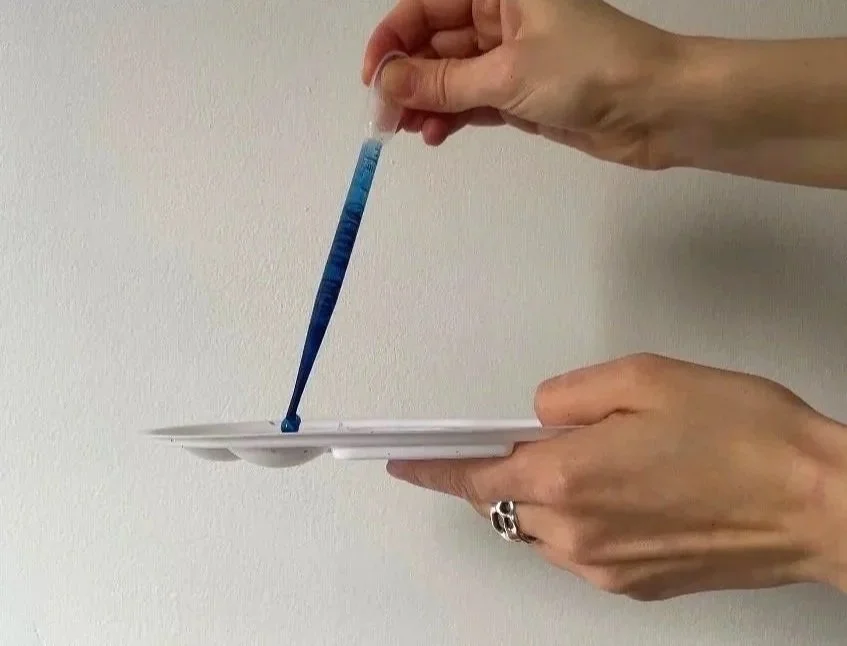
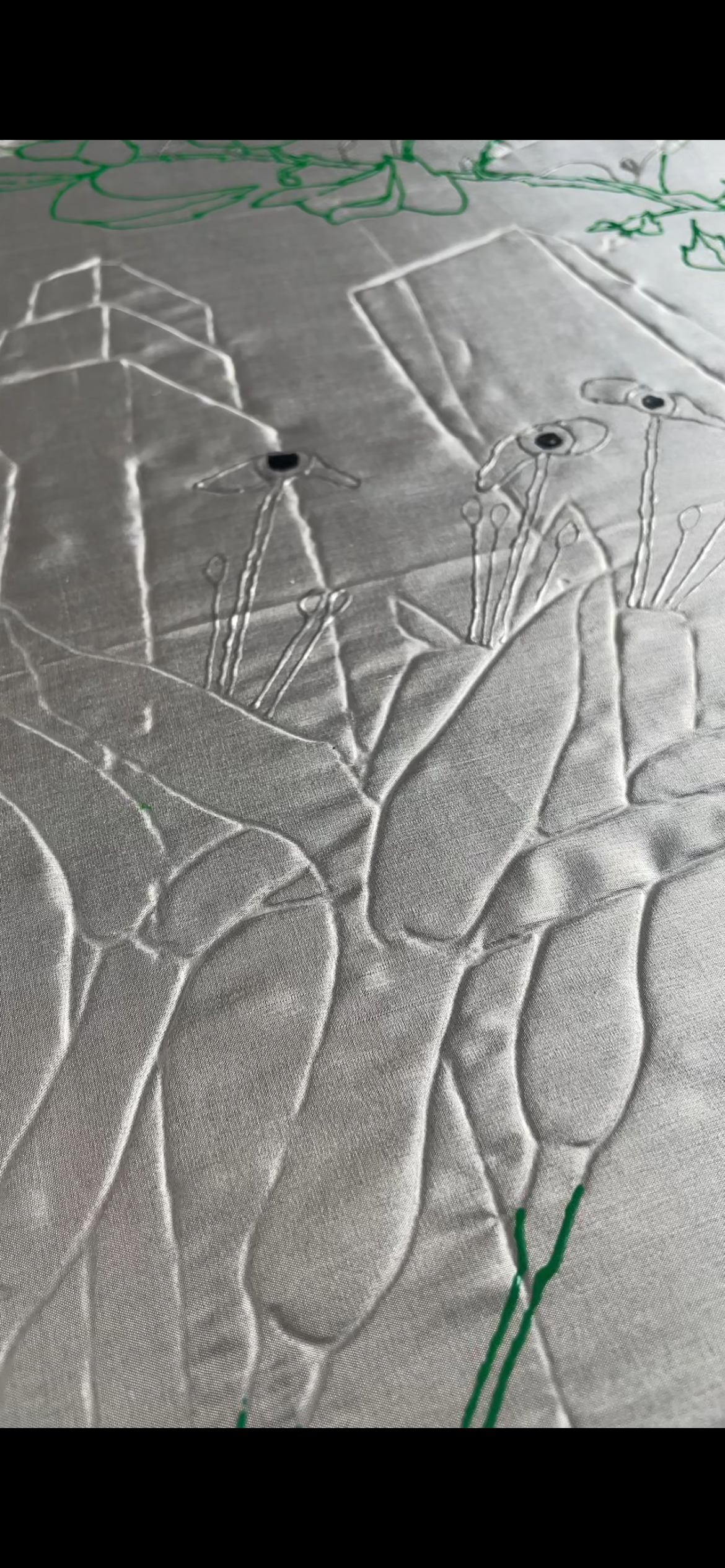
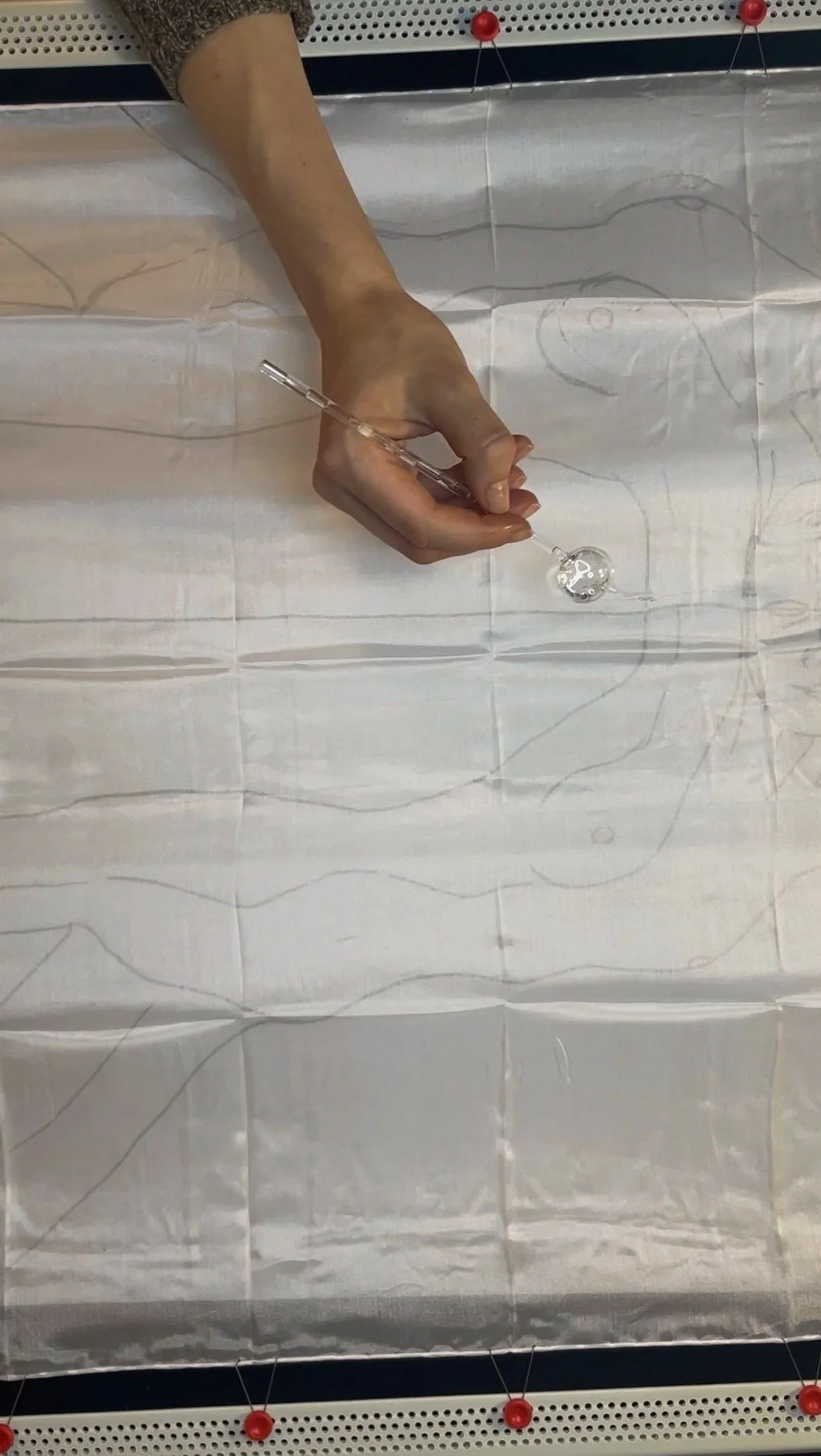
Next, I transfer the drawing onto the silk and trace it using a small glass canting tool filled with a wax-like resist. With this step I create the fine barriers that will later guide the colour and prevent it from spreading across the fabric.
This part requires absolute concentration. The lines cannot hesitate, every movement remains visible. The silk is translucent, as often is the resist, so I cannot rely on sight alone. I also need to work without resting my hand on the surface, unsupported.
So, I follow the movement from memory and instinct. After a while, thoughts fall away and leave a meditative void in my head. It feels less like drawing and more like tracing something that already exists.
When the outlining is finished, a delicate structure remains on the silk. It will hold everything that comes next. Now the silk must rest and dry completely before any colour can be added, ensuring precision and clarity, where intended.
2
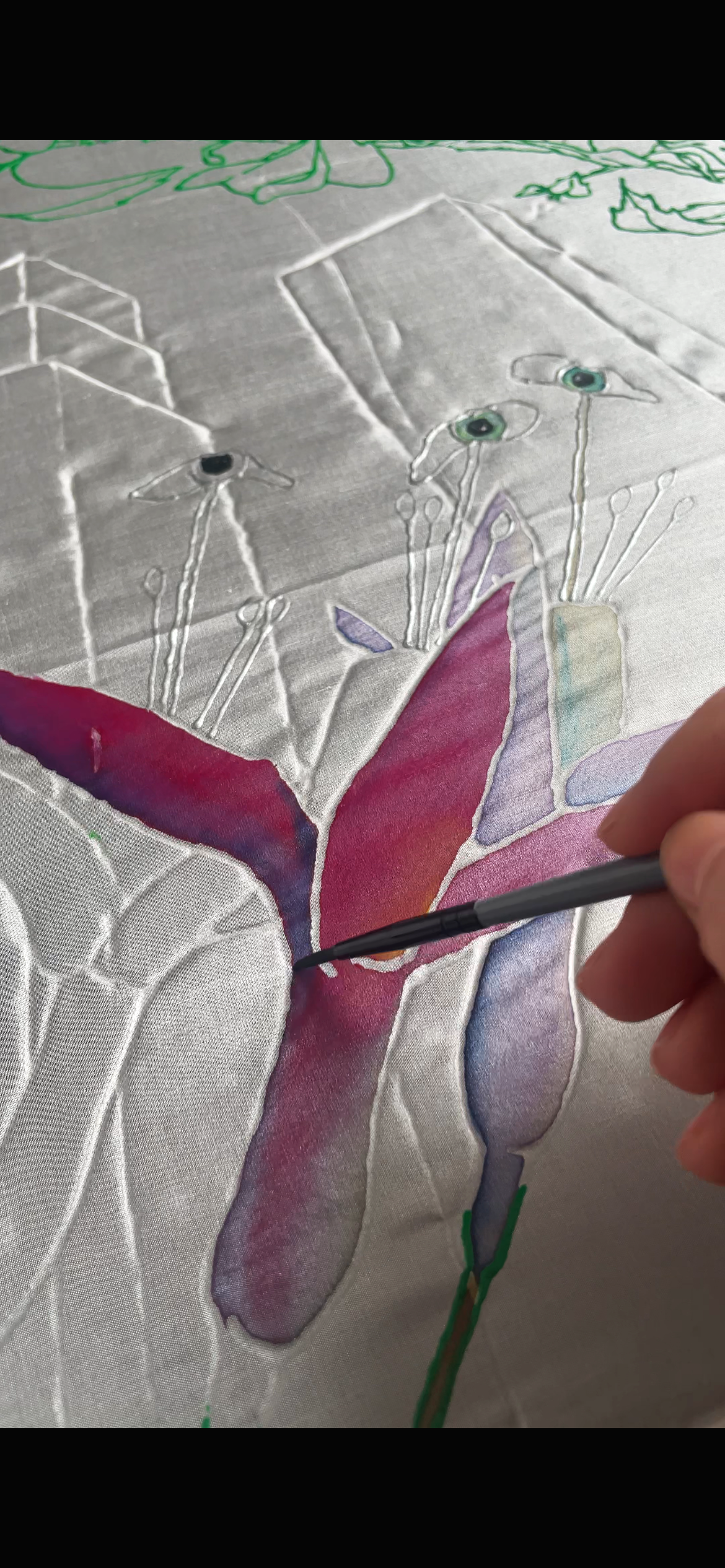
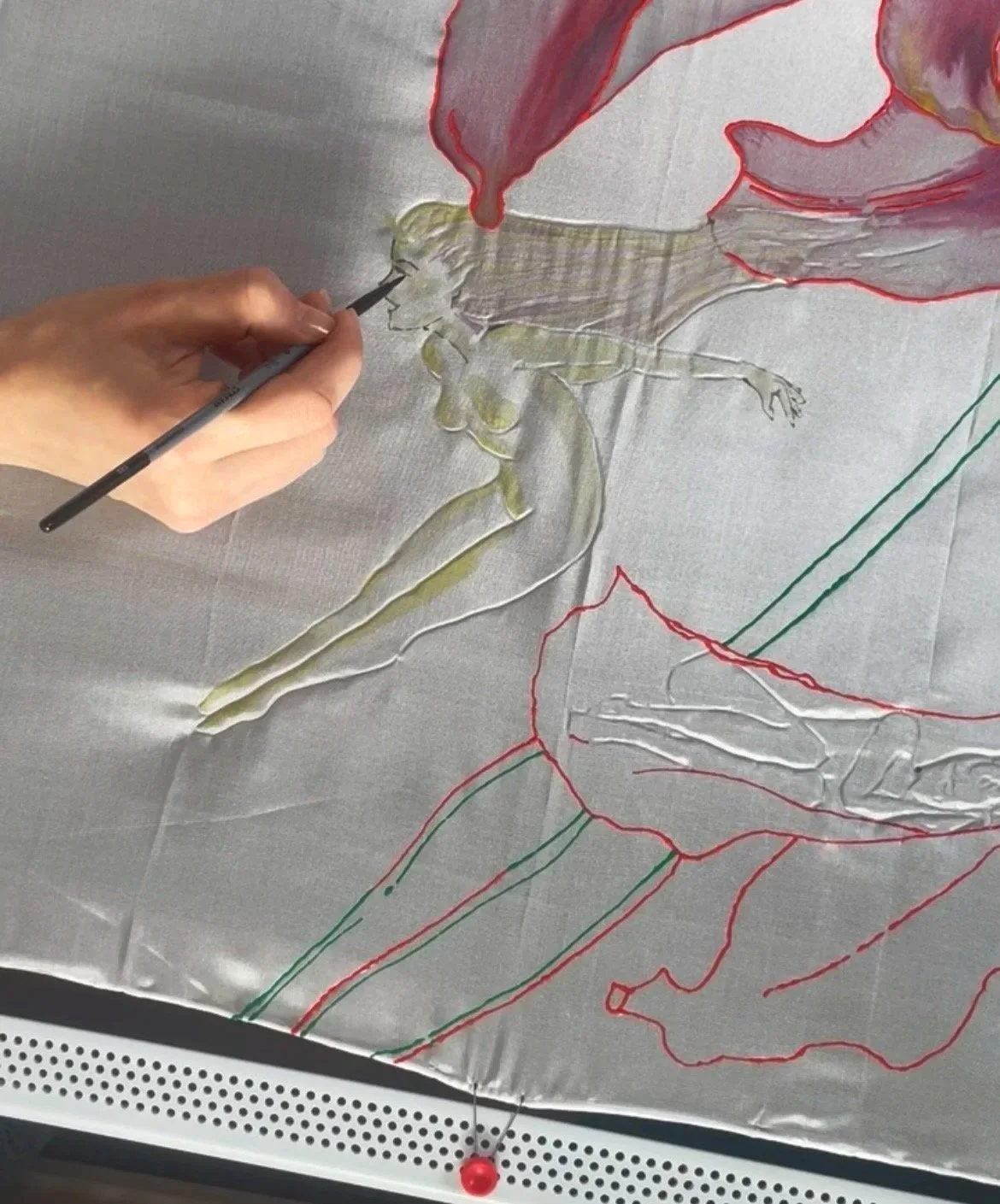
Colour is then painted directly onto the fabric with brushes. Working in transparent layers, I allow the dyes to move through the silk, creating luminous effects similar to watercolour or stained glass.
The process is fluid and cannot be fully controlled or undone, so each decision happens in the moment. It is also the part I have the most fun with. The structure is already there and I can begin to respond to what is happening rather than follow a plan.
I allow myself to experiment with different techniques and subtle interventions, use simple natural materials — for example salt — to shift the movement of the colour, pull pigment outward, or create unexpected gradients. The silk reacts to everything: water, gravity, timing, even the humidity in the air.
There is a balance between intention and letting go. I guide the colour, but I also have to trust it. When it works, the image seems to emerge rather than being forced into place.
3
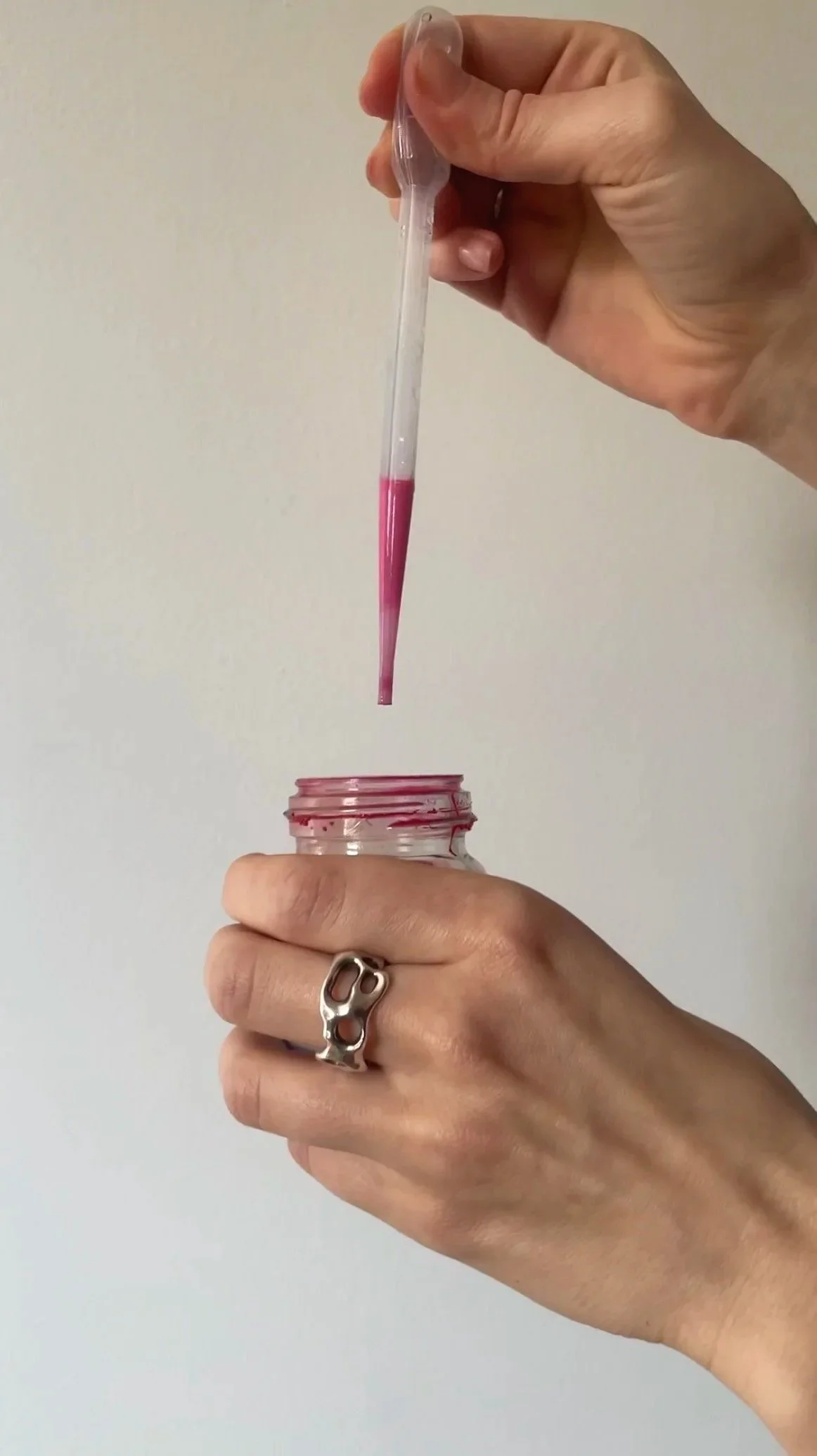
Once the painting is complete, the colours must be fixed so they become part of the silk itself and can be worn without fading or bleeding. This step transforms the piece from something fragile into something meant for real life.
After fixation, the silk is carefully washed to remove any remaining residues and then dried. Seeing it wet for the first time is always a moment of uncertainty — the colours deepen, the fabric becomes heavy, and I have to trust that everything will settle as it should.
When it dries, the silk returns to its natural lightness and softness, but the image is now permanently embedded in the fibres. The colours regain their luminosity, and the piece reveals its final character — often slightly different from what I imagined, shaped by everything that happened along the way.
After this final stage, the silk retains its softness, luminosity and unique character — a singular work that exists only once, ready to be carried close.